







Basic Philosophy and Objectives of Ageo International Education Center (AIEC)
Based on the Frame of eference for Japanese Language, Ageo International Education Center (AIEC) cultivates the Japanese language proficiency necessary for studying at graduate schools, universities, vocational schools, etc., and supports students in advancing to higher education institutions that match their life goals.
Features of Ageo International Education Center (AIEC) Curriculum
While a B2 level proficiency in each of the five domains of language activity is generally required for higher education, acquiring reading and speaking skills takes time. Therefore, at the B2 level, in addition to "Comprehensive Japanese," "Reading" and "Speaking (Interaction)" subjects are provided to strengthen these skills and prepare students for external examinations.
Course and Class Hours
▷College Preparatory Course for Higher Education 2 Years (April Enrollment)
▷College Preparatory Course for Higher Education 1 Year and 9 Months (July Enrollment)
▷College Preparatory Course for Higher Education 1 Year and 6 Months (October Enrollment)
Class Hours and Holidays
▷4 unit hours/day (1 unit hour is 45 minutes)
▷Total Class Hours a Year: 768 unit hours/year
*An additional 16-20 unit hours of attendance are required for ceremonies, field trips, health checkups, and class presentations.
▷Class Hours: 9:00-12:20 / 13:20-16:40
▷Holidays: Saturdays, Sundays, National Holidays, Summer, Winter, and Spring Holidays.
*For details, please refer to the application guidelines.
Features of AIEC
1Fun and Eeffective Lessons
We incorporate language activities that integrate multiple areas, allowing students to learn all four skills and five fields comprehensively.
Initiatives for Autonomous Learning
We implement initiatives to enhance students' self-regulation skills, allowing them to reflect on previously learned material and independently develop learning plans for their next goals.
Strengthening Weak Subjects (Skills)
Analysis of accumulated our test results revealed that many students struggle with reading, so a subject has been established to strengthen this skill. This strengthening will also lead to improved scores on external examinations.
Interview Preparation
Interviews, which are extremely important in higher education entrance examinations, are addressed through the enhanced subject "Conversation." Individual practice sessions are also conducted outside of class time.
One-Year Learning Schedule
The annual schedule, including class schedules and school exam dates, is predetermined. Students can balance their studies with extracurricular activities.
Specified Skills Assessment Test
Support is provided to students who change their career path to employment in order to help them pass the skills assessment test.
Exam Pass Rate
Professional teachers with extensive experience in Japanese language education, make the higher pass of the JLPT exam.
Student Guidance
Staff members with overseas study experience provide appropriate guidance on academic concerns and personal issues, offering attentive support until graduation.
Class Presentations and Field Trips
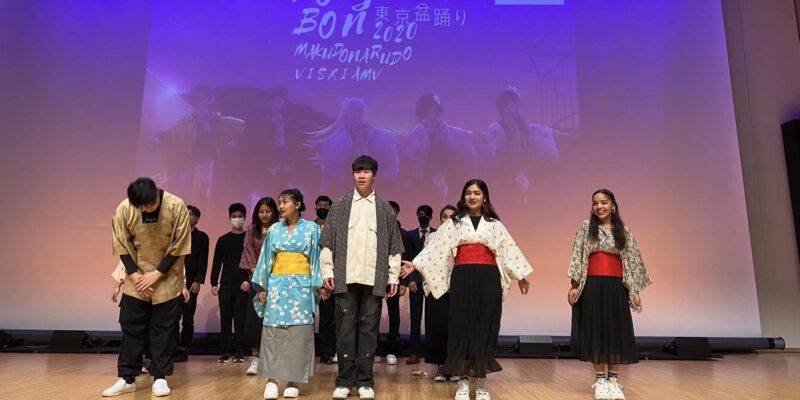
Every December, a presentation event is held at the Civic Hall where each class collaborates to practice and perform Japanese plays, choral singing, and other activities. Day trips and calligraphy classes are also held.
A Warm Atmosphere
In the warm atmosphere unique to a small school (capacity of 100 students), there is a healthy learning environment where students respect and support each other, both among themselves and between students and faculty.
About JLPT and EJU
Examination for Japanese University Admission for International Students (EJU) is an examination administered to assess the Japanese language proficiency and basic academic skills required by Japanese universities for international students who wish to enroll in Japanese universities. More than 90% of national universities, 60% of public universities, and about 60% of private universities use the EJU, and having an EJU score can broaden your options for further education. In addition, the EJU is used in a total of 159 graduate schools at 72 universities, including Hitotsubashi University, Saitama University, Keio University, and Hosei University.
Scholarship
Students who diligently and consistently pursue their studies serve as role models for other students and will be awarded commendations for their diligence.
About Ageo
From Ageo Station, served by the Takasaki Line and Shonan Shinjuku Line, it takes 8 minutes to Omiya Station (a major terminal station), 35 minutes to Ikebukuro Station, and 43 minutes to Tokyo Station. The school is a 12-minute walk from Ageo Station, and Ageo Library (main branch) is located along the way, making it ideal for studying and reading outside of class hours and on holidays.
Furthermore, there are many well-known higher education institutions in the surrounding area, including Seigakuin University (Ageo), Saitama Dental Hygienist College (Ageo), Kanto Welfare College (Kou-nosu), Kanto Automobile College (Kou-nosu), and Ohara Bookkeeping and Information Business College (Omiya).